CLIMATE CHANGE: GOING BEYOND THE ATMOSPHERE

Climate change is predominantly discussed in terms of greenhouse-gas emissions, global warming and the transition to cleaner energy. While reducing emissions remains fundamental, the effects of climate change are increasingly experienced on the ground through extreme heat, floods, water logging, drought, groundwater depletion and changing rainfall patterns.
At SILVERON, we have always believed that water is far more than a simple commodity. Its unique and complex properties make it indispensable to sustaining life and maintaining the ecological balance of our planet.
This perspective raises a broader question: Can better management of water and land become an important part of climate resilience?
The challenge can be viewed at three interconnected levels:
- Global mitigation: Reducing greenhouse-gas emissions to limit global warming.
- Climate adaptation: Managing the consequences of extreme heat, intense rainfall, floods and droughts.
- Landscape resilience: Enhancing the ability of land to absorb, store and manage water and regulate local environmental conditions.
While groundwater recharge cannot substitute for emission reduction, it offers a practical means of strengthening climate resilience. This is where SILVERON’s work in rainwater harvesting and artificial groundwater recharge becomes particularly relevant.
Groundwater Recharge: An Established Foundation
Where geological conditions are suitable, properly designed groundwater recharge systems can:
- Capture rainfall that would otherwise flow away as surface runoff.
- Reduce runoff and help mitigate flooding and water logging.
- Replenish groundwater and improve water availability during dry periods.
- Store water underground, with substantially lower evaporation losses than open surface storage.
These established benefits form the foundation of SILVERON’s approach to sustainable water management.
SILVERON: Evidence from the Field
With over two decades of firm experience and 25+ years of founder field practice, SILVERON has designed and implemented over 3,000 rainwater-harvesting and water-conservation structures across diverse geological and climatic conditions in India.
Our work involves site-specific assessments of soil strata, geological formations, aquifer conditions and recharge performance. This experience has reinforced the importance of adapting recharge systems to local geological conditions.
The SILVERON Unlined Recharge Shaft
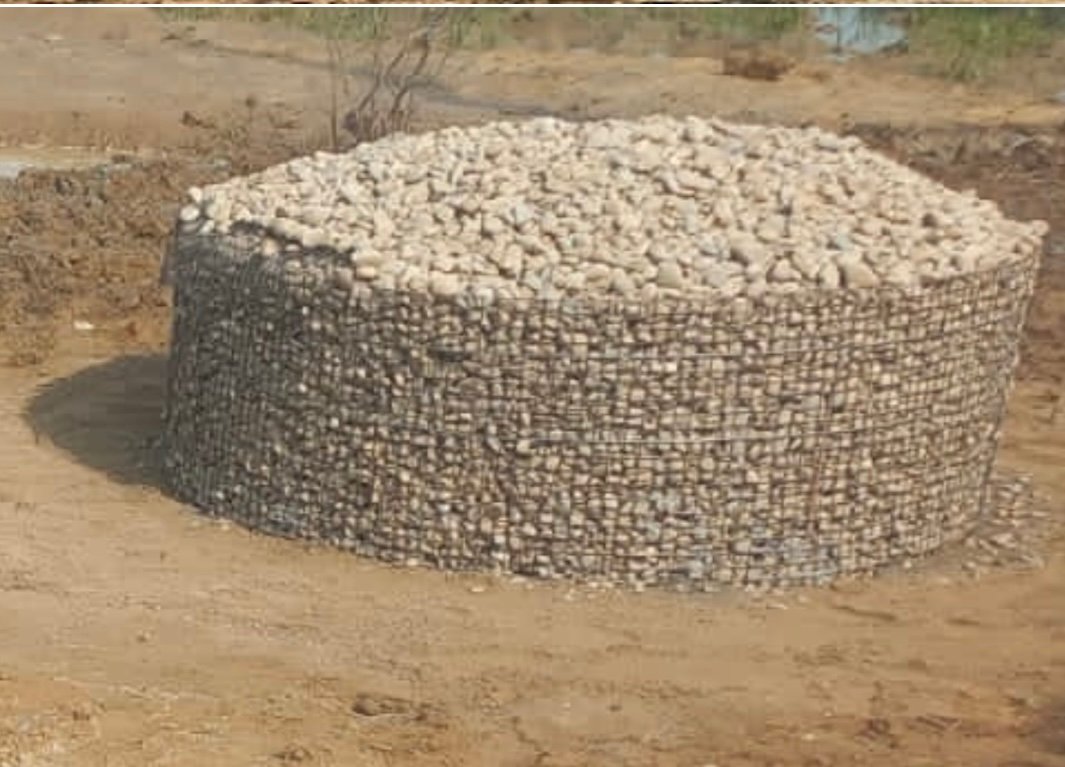
SILVERON’s unlined recharge shaft is based on the principle of working with the natural geological profile. It provides a pathway for appropriately managed rainwater to enter suitable underground formations, allowing interaction with the surrounding strata.
The underlying design philosophy is to facilitate the natural movement of water through suitable geological formations rather than confining it entirely within an engineered conduit.
Depending on soil permeability and geological conditions, this approach may also promote the redistribution of subsurface moisture towards surrounding soil and the root zone, potentially supporting vegetation growth.
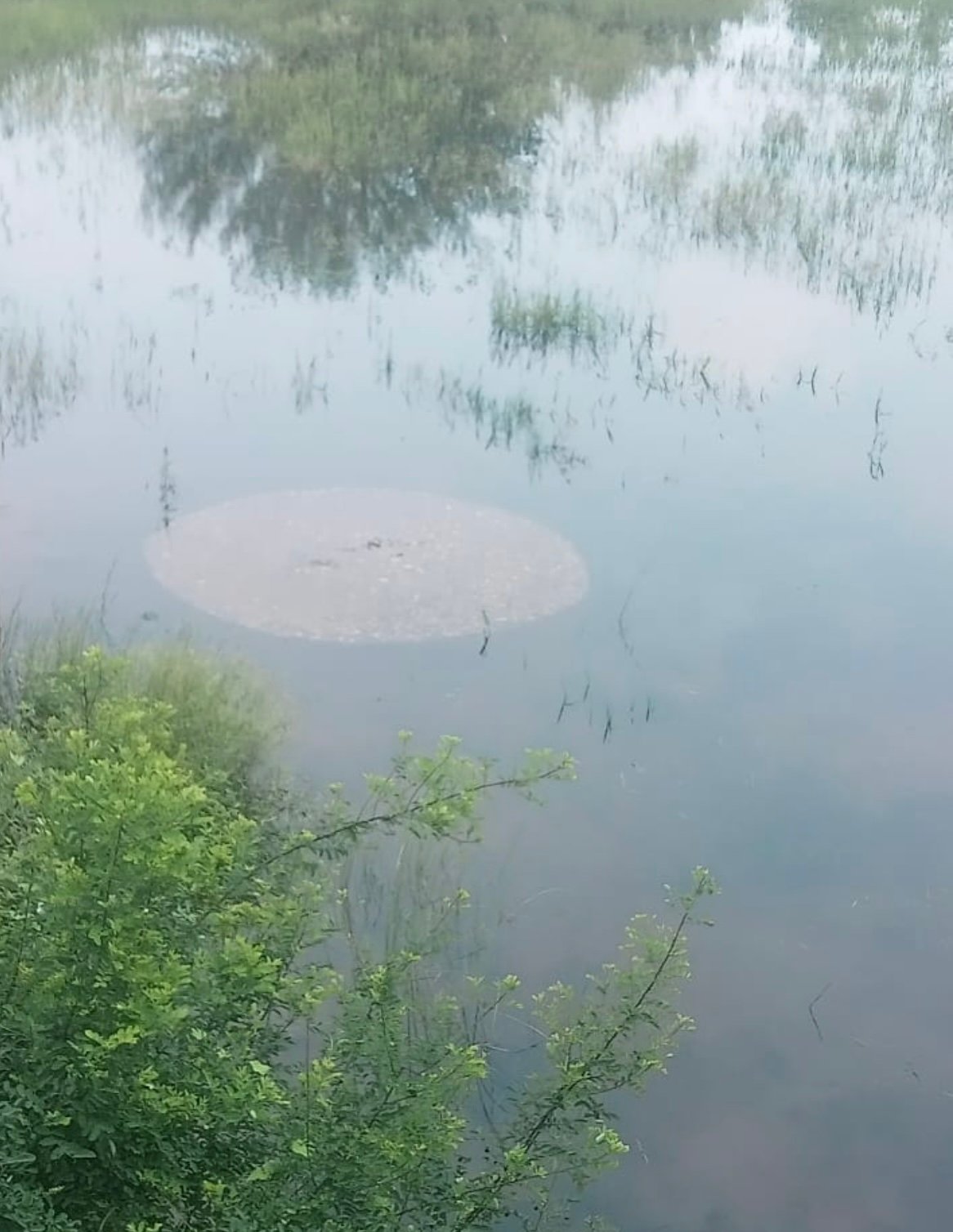
SILVERON has implemented recharge projects in areas affected by seasonal flooding, water logging, low-permeability soils and fractured rock formations. Its field experience in Haryana, for example, includes installations in agricultural areas affected by heavy upstream rainfall.
These projects provide valuable opportunities to study how appropriately designed recharge systems can improve local water management. Their effectiveness, however, depends on site-specific conditions and requires systematic monitoring.
Beyond Water: Exploring the Potential Thermal Benefits
Could groundwater recharge also influence the thermal behavior of the land?
This is an important question that deserves scientific investigation.
Rainwater carries thermal energy, while soil and geological formations act as natural reservoirs of both water and heat. Near the surface, soil temperatures fluctuate considerably with weather and seasonal changes, whereas deeper geological formations generally experience much smaller seasonal temperature variations.
Urbanization and other forms of land development have increasingly replaced permeable surfaces with roads, buildings and other impermeable structures. This accelerates runoff, reduces natural infiltration and alters the interaction between the land, water and atmosphere.
Restoring the movement of rainwater into suitable geological formations may help recover some of the land’s natural hydrological functions.
Repeated recharge could potentially influence subsurface moisture and thermal conditions and, consequently, affect the thermal behavior of the overlying land. However, the extent, duration and significance of these effects remain uncertain and require scientific validation.
The Subsurface Deserves Greater Attention
The ground beneath us is an important natural reservoir of water and heat. Restoring the natural movement of rainfall into the subsurface may strengthen local hydrological resilience and potentially provide additional environmental benefits.
The relevant question is not whether a recharge shaft can cool the planet, but whether large-scale restoration of subsurface water storage can improve the hydrological and potentially thermal resilience of individual landscapes.
Answering this question will require collaboration among hydrologists, geologists, climatologists and environmental scientists, supported by long-term field measurements and independent research.
Conclusion: A Broader Perspective on Climate Resilience
At SILVERON, we believe water deserves to be viewed beyond its conventional role as a natural resource. Its movement through soil, geological formations and ecosystems is fundamental to sustaining life and maintaining environmental balance.
Climate change cannot be addressed through groundwater recharge alone. Reducing greenhouse-gas emissions remains essential. At the same time, improving rainfall management, groundwater replenishment and land resilience can make a meaningful contribution to climate adaptation.
The established benefits of groundwater recharge—including runoff management, flood mitigation, groundwater replenishment and reduced evaporation losses—are already significant.
The possibility of additional thermal benefits presents a new area for scientific exploration, particularly in understanding the broader environmental implications of restoring subsurface water storage.
Perhaps, alongside asking how much rainwater we can harvest, we should also ask, what happens to our land, water and local environment when we restore the natural movement of rainwater into the ground?
This is a question SILVERON believes deserves greater scientific attention, independent research and collaborative exploration.
Really insightful piece. Groundwater recharge is such an important part of building climate-resilient communities, especially as water challenges continue to grow. Great to see practical solutions getting the attention they deserve. What do you see as the biggest challenge in implementing groundwater recharge solutions at scale?
I have had the opportunity to collaborate with Silveron and Mr. Sunil Sharma on ground water recharge initiatives in Rajasthan. The approach of Silveron is so unique to the local watershed rather than one fits all. Hundreds of recharge shafts in Kaladera area is a testimony to Silveron’s approach to the ground water recharge.
I know Mr Sharma since 1977
His passion for ground water recharge is admirable.
His relentless efforts in Jsipur, Rajasthan a water parched land, has bore fruits.
It deserves huge applause
Carry on Sunil
I feel privileged to have the opportunity to interact with a professionally competent rainwater-harvesting expert like Mr. Sunil Sharma. Although I am not directly associated with this field, his professional insights and practical explanations of the work being undertaken have continually refined my thinking and made me reflect seriously on the growing challenge of water depletion.
The rate at which we are extracting groundwater and other natural resources from the Earth makes scientific, systematic and professional water-recharge practices essential. If timely corrective measures are not adopted, future generations may face serious water scarcity and even conflict over this basic resource.
Governments and policymakers therefore need to give greater priority to scientifically designed groundwater-recharge and water-conservation policies and incorporate the practical knowledge of professionals working in this field. Experts and practitioners such as Mr. Sunil Sharma can contribute valuable field-based knowledge in developing and implementing effective policies.
We are not only depleting groundwater but also extracting oil, gas and other finite resources from the Earth. This makes it even more important to adopt a long-term, scientific and sustainable approach towards natural-resource management.
In essence, water conservation and scientific groundwater recharge should not be viewed merely as environmental initiatives, but as an essential responsibility towards the survival, security and well-being of future generations.
Very good article and approach to rainwater harvesting. It makes so much sense. Kudos and Best of luck to Silveron and Mr Sunil Sharma.
Sunil and I were together in the graduate program for business, and since then, I have always admired Sunil’s passion to find solutions. I am sure his approach and solutions to water hasvesting will change the landscape for better.
A really thoughtful article! The possible connection between groundwater recharge and thermal resilience is especially interesting from an architectural perspective. If demonstrated through long-term field data, it could help us look at rainwater recharge not just as a water-management solution, but as part of how we design the landscape, microclimate and overall environmental performance of a site. Definitely something younger architects need to be more aware of.
I highly appreciate Mr. Sunil Sharma of Silveron for bringing forward such a forward-thinking and practical perspective on climate resilience. By shifting the conversation from distant atmospheric goals to tangible, ground-level actions like groundwater recharge and rainwater harvesting, he also highlights the critical need for immediate landscape adaptation. This thought underscores the vital truth that safeguarding our water systems is just as urgent as reducing emissions for securing a sustainable future.