AI’s Thirst for Water Far Exceeds Our Wildest Imagination
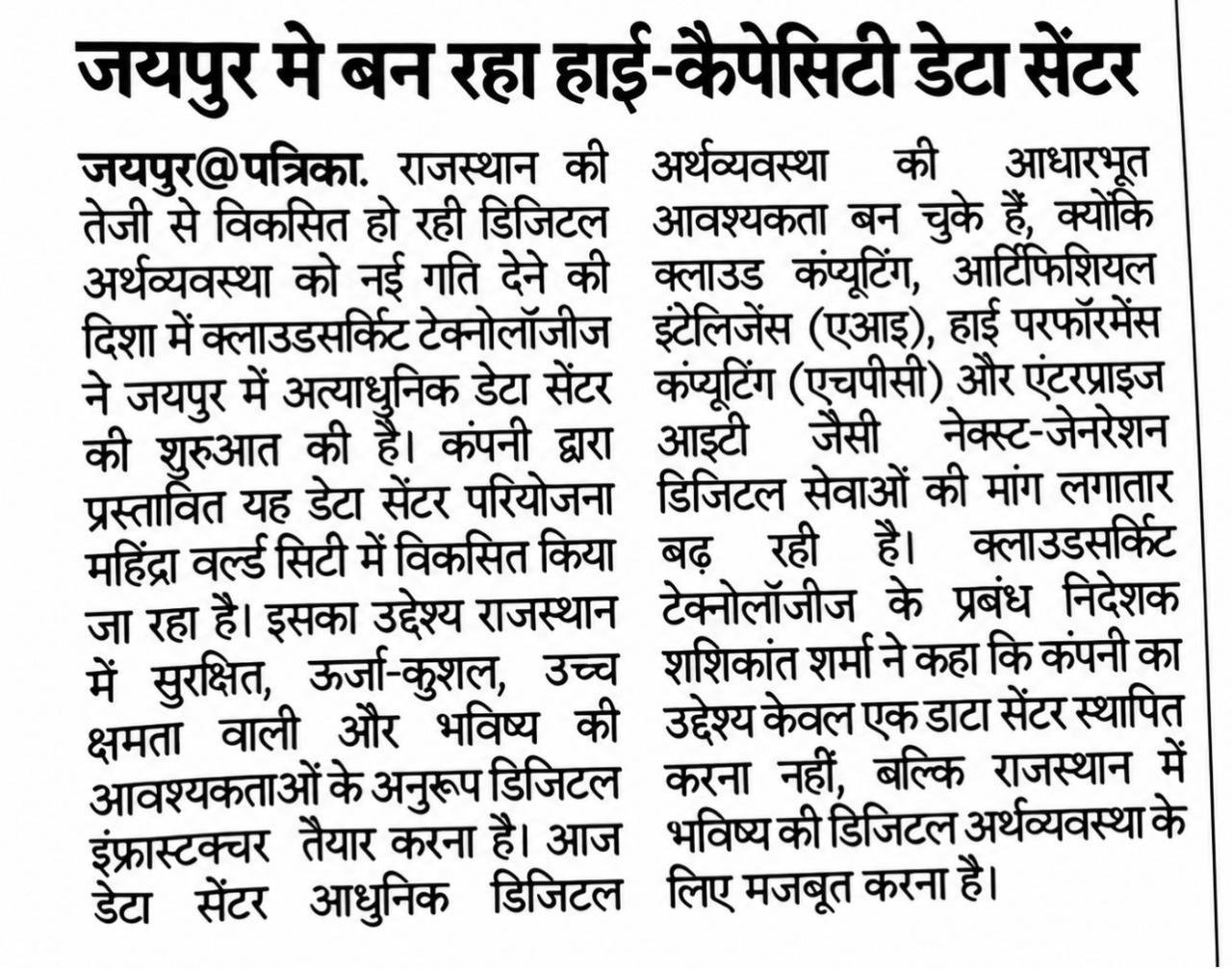
When we think about Artificial Intelligence (AI), we naturally think of computing power, advanced semiconductors, enormous data centres, and the vast amounts of electricity required to power them.
Yet there is another critical resource behind the AI revolution that deserves equal attention: WATER. It is just as essential to the functioning and expansion of AI infrastructure, but remains far less appreciated.
Interestingly, if we are intelligent enough to create Artificial Intelligence, we should also be intelligent enough to create water-intelligent data centres.
The extraordinary growth of AI is driving an equally extraordinary expansion of computing infrastructure. Behind every AI query, every model and every application are powerful processors operating continuously.
Almost all of the electricity consumed by these servers ultimately becomes heat, and this heat must be removed continuously, every second of every hour of every day, 365 days a year.
This is where water enters the story.
One of the most widely used methods of cooling data centres is evaporative cooling, in which water absorbs heat from the system and a portion of that water evaporates, carrying the heat away. As AI computing capacity continues to expand, the demand for cooling increases and so does the demand for water.
How much water are we talking about?
Consider a hypothetical 100 MW data centre operating at a water-consumption rate of just 1 litre per kWh. At full power, it would consume approximately 2.4 million litres (24 lakh litres) of water every day. That translates to approximately 876 million litres, or 87.6 crore litres, of water every year, and this is for just one 100 MW data centre.
Fortunately, Not All the Water Is Lost
The water used for cooling data centres should not automatically be considered “consumed.” Technologists and engineers are continuously addressing an important set of questions: How much freshwater is actually consumed? How much can be recovered? How many times can the same water be reused? And why evaporate water when its heat can potentially be removed mechanically?
Instead of relying primarily on evaporation, why not circulate water through a closed-loop cooling system, remove its heat mechanically, and reuse the same water repeatedly?
Technologies such as closed-loop liquid cooling, heat exchangers, dry coolers and mechanical chillers can significantly reduce dependence on freshwater. However, mechanical cooling and refrigeration also require additional electricity. The most efficient solution may therefore be a hybrid cooling system, using dry cooling whenever ambient conditions permit and mechanical refrigeration or other active cooling methods only when necessary.
There is also an important role for rainwater harvesting and groundwater recharge in the overall water strategy of large data-centre campuses. Rainwater can potentially be harvested and stored for suitable non-potable applications, while appropriately treated water can contribute to groundwater recharge where hydrogeological conditions permit.
However, cooling-system wastewater should never be directly recharged into groundwater without appropriate treatment and quality testing. Depending on the cooling process, it may contain concentrated salts, increased hardness, chlorides, sulphates, corrosion inhibitors, biocides and other water-treatment chemicals.
The objective should therefore be to use less freshwater, reuse water as many times as technically and safely possible, and ensure that any water returned to the environment meets appropriate quality standards.
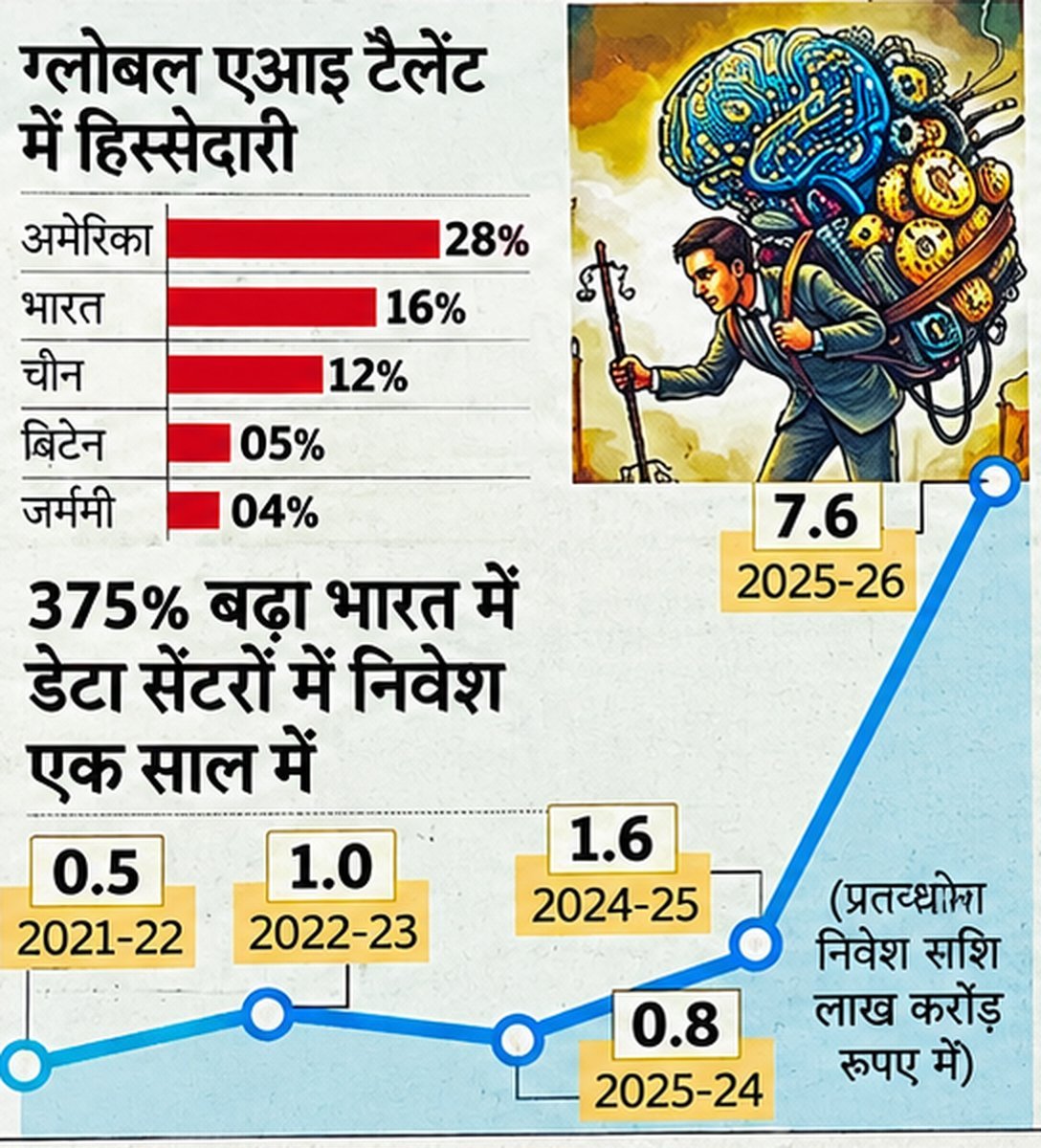
Water Efficiency: The Technology Matters
The water footprint of an AI data centre is not inevitable. It depends significantly on the cooling technology employed.
Traditional evaporative cooling can consume substantial quantities of freshwater because heat is dissipated through evaporation. However, newer technologies such as air cooling, closed-loop liquid cooling, direct-to-chip cooling and immersion cooling can dramatically reduce water consumption and, in some configurations, bring operational cooling-water use close to zero.
Several data-centre operators in India are already adopting more water-efficient cooling approaches. This demonstrates that the rapid growth of AI does not necessarily have to translate into a proportionate increase in freshwater consumption.
However, the future of AI cannot be separated from the future of water. As global demand for AI computing continues to accelerate, water requirements associated with data centres could become a significant concern—particularly in India, where many regions already face groundwater depletion and water stress.
The goal for India should therefore be clear: all AI infrastructure must become not only energy-efficient, but also water-efficient.
Every litre of freshwater saved through smarter cooling technology is a litre that remains available for people, agriculture and ecosystems.
About SILVERON. SILVERON is a rainwater harvesting and hydrogeological solutions engineering consultancy based in Jaipur, specializing in industrial rainwater harvesting and deep aquifer recharge, with more than 3,000 recharge structures executed across India. Our work includes subsurface strata surveys, recharge shaft design and installation.
To discuss a site assessment, write to contact@silveron.in or call +91-9829085788. Learn more about our engineering services or request a site survey and strata assessment.
Nice Article. The Data Centres consume huge amounts of water and power. Though water can be used more efficiently by recycling techniques. As per my understanding, such techniques are already in use in power stations.